


2026
When Should You Start Active Rehab After a Car Accident?
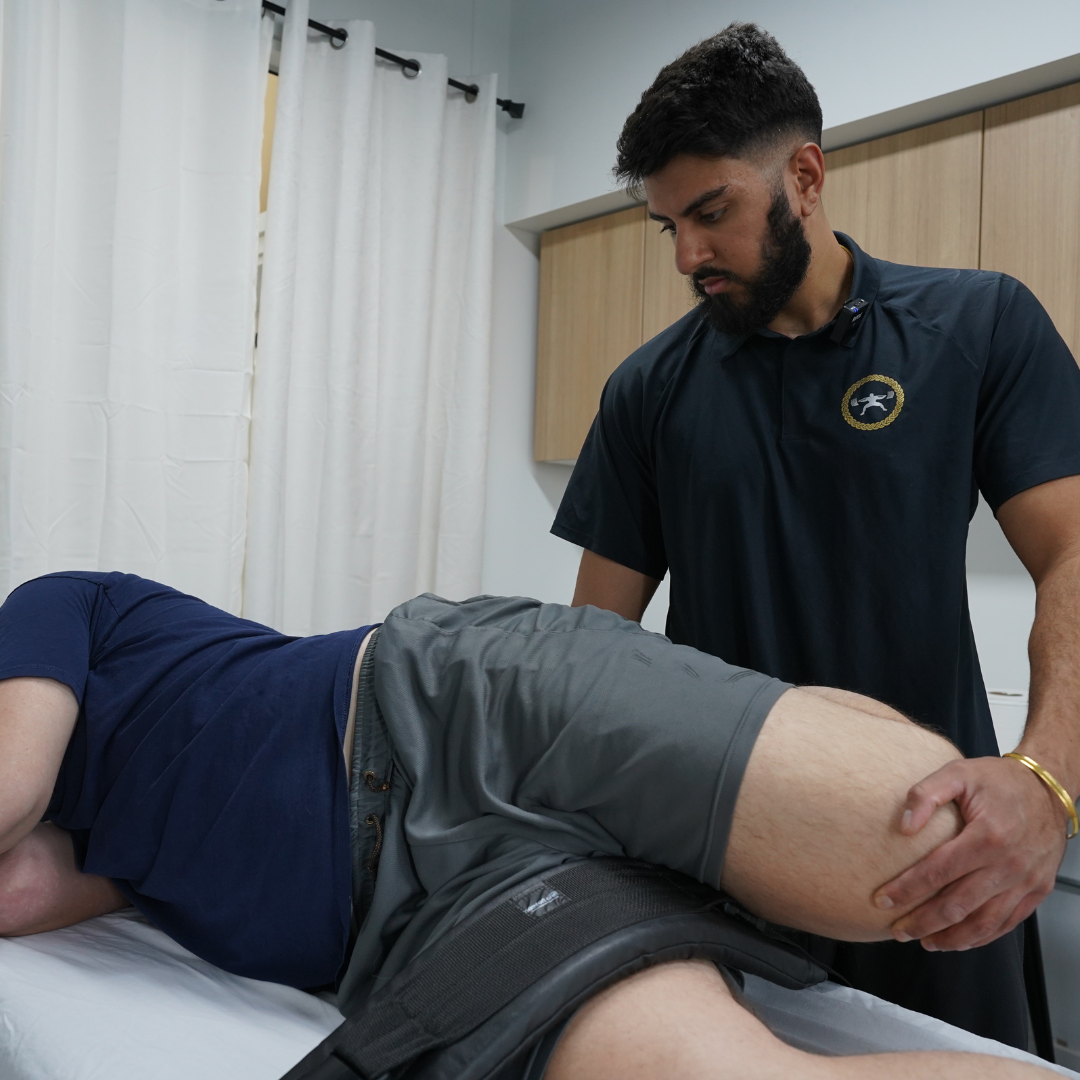
When Should You Start Active Rehab After a Car Accident? A Kinesiologist's Guide to Recovery
After a car accident, even simple activities can become frustrating. Turning your head to check your blind spot, sitting through a workday, carrying groceries, or getting back to your regular workouts might suddenly feel uncomfortable.
A common question people have after an accident is whether they should wait until the pain disappears before starting exercise. The answer depends on your injuries, but in many cases, you don't need to be completely pain-free to begin active rehabilitation.
At Genuine Athletics & Rehabilitation in South Surrey, our kinesiologists help people recovering from motor vehicle accidents gradually regain their movement, strength, and confidence through individualized ICBC active rehabilitation programs.
One of the principles we use to guide exercise progression is called progressive overload. While that might sound like something reserved for athletes lifting heavy weights, it's just as relevant for someone recovering from whiplash or trying to comfortably get through a day at work.
Do You Need to Wait Until the Pain Goes Away?
Not necessarily.
After a motor vehicle accident, your body may respond with stiffness, muscle tension, swelling, and increased sensitivity to movement. Activities that were previously effortless can suddenly feel challenging. It's understandable to want to rest and avoid anything that might make the pain worse.
Rest can be important immediately following certain injuries. However, for many uncomplicated muscle and joint injuries, avoiding movement for too long can lead to additional stiffness, reduced strength, and decreased tolerance for everyday activity. This doesn't mean you should head straight back into the gym or push through significant pain.
Instead, the goal is to identify which movements are appropriate for your current stage of recovery and gradually build from there. Some individuals can begin gentle mobility exercises relatively early. Others may require additional medical assessment, treatment, or a period of activity modification before progressing.
The timing of active rehab should be based on your specific injury, symptoms, and functional abilities, not simply how many days have passed since your accident.

How Active Rehab and Physiotherapy Work Together
Physiotherapy, massage therapy, acupuncture, and active rehabilitation can all play valuable roles in recovery, but they don't necessarily serve the same purpose. Hands-on treatments and other physiotherapy interventions may help manage symptoms, address specific impairments, and make movement more comfortable.
Active rehabilitation focuses on what your body can do.
- Can you comfortably turn your neck while driving?
- Can you lift your child without aggravating your back?
- Can you stand throughout your work shift or return to the activities you enjoyed before your accident?
These are the kinds of functional goals that help guide an active rehabilitation program.
At Genuine Athletics & Rehabilitation, our multidisciplinary facility brings physiotherapy, registered massage therapy, acupuncture, naturopathic medicine, kinesiology, and strength training together under one roof. This allows patients to access different forms of care as their needs change throughout recovery.
What Is Progressive Overload, and How Does It Help Injury Recovery?
Progressive overload is a simple exercise principle: gradually increase the demands placed on your body as your ability to handle those demands improves. In a traditional strength-training program, this might mean lifting a slightly heavier weight or completing a few additional repetitions.
During injury rehabilitation, progression can look quite different.
For someone recovering from a car accident, it might mean:
- Turning their neck a little farther without significantly increasing symptoms.
- Gradually increasing how long they can comfortably walk.
- Progressing from basic bodyweight movements to resistance exercises.
- Improving their ability to lift, carry, push, or pull everyday objects.
- Building enough muscular endurance to get through a full workday.
- Returning to recreational sports, gym workouts, or other physical activities.
- Consider someone experiencing lower-back pain after a collision.
Initially, their exercise program might include gentle mobility work, controlled sit-to-stand movements, and short periods of walking. As their symptoms and movement tolerance improve, their kinesiologist may introduce bodyweight squats, light resistance exercises, or functional lifting movements. Eventually, the individual might progress toward carrying heavier objects or performing more demanding exercises that resemble their work or recreational activities.
There's no need to rush through these steps. The appropriate progression depends on how the person responds.
The same principle applies whether your goal is returning to a physically demanding job, walking along the White Rock waterfront, or getting back to regular strength training.
Start your return-to-work, sport, or life program with Genuine
Three Areas We Focus on During Active Rehabilitation
Although every recovery program is different, there are three areas we commonly work on throughout rehabilitation.
1. Restoring Comfortable Movement
Following an accident, stiffness and discomfort can make people hesitant to move.
Someone with whiplash may struggle to turn their head while driving. Another person might have difficulty bending forward or reaching overhead. Early exercises may focus on gradually restoring comfortable movement through the neck, shoulders, back, and hips. Depending on the injury, this could include gentle neck rotations, upper-back mobility, shoulder movements, or controlled hip exercises.
The goal isn't to force your body into uncomfortable positions. It's to help you regain movement at a pace you can tolerate.
2. Rebuilding Strength and Control
Being able to move through a particular range of motion is important, but you also need the muscular strength and control to use that movement throughout your day. For example, someone recovering from a neck injury may benefit from exercises targeting the muscles that support the cervical spine and shoulder blades.
Someone experiencing lower-back discomfort might work on improving trunk strength, hip control, and lower-body endurance. Exercises could include resistance bands, controlled bodyweight movements, light dumbbell exercises, and balance or stability work.
Your program should reflect the activities you're having difficulty with rather than simply following a standard exercise routine.
3. Gradually Returning to Normal Activities
As mobility, strength, and exercise tolerance improve, rehabilitation can become more specific to your everyday life.
For an office worker commuting from South Surrey, this might involve improving tolerance to prolonged sitting and rebuilding neck and upper-back endurance. For someone working in construction or another physically demanding occupation, it may involve progressively loading squats, lifting exercises, and carrying movements.
For an active individual, the goal might be returning to running, strength training, golf, softball, or other recreational activities. This is where progressive overload becomes particularly useful. Your kinesiologist can adjust resistance, repetitions, exercise difficulty, and overall workload based on your progress.
These areas of rehabilitation aren't necessarily completed one after another. Mobility, strength, and functional activity often overlap, and your program may need adjustments along the way.
Is It Normal to Experience Some Discomfort During Active Rehab?
One concern we want patients to understand is that pain during movement doesn't automatically mean you're causing further damage. Following an injury, the nervous system can become more sensitive. Certain movements may remain uncomfortable even as tissues heal and physical function improves. Depending on the injury, some mild and temporary discomfort during rehabilitation may be acceptable. What matters is the type of discomfort, how severe it becomes, and how your symptoms respond afterward.
For example, if a light exercise causes minor discomfort that settles quickly, your kinesiologist may determine that the activity is appropriate to continue or modify. If an exercise causes sharp pain, progressively worsening symptoms, or a significant flare-up that persists, it may be necessary to reduce the difficulty or reassess the program. New or worsening numbness, weakness, or other neurological symptoms also require appropriate medical assessment.
Recovery isn't always a straight line. You may have days when movement feels easier and others when symptoms are more noticeable. A successful rehabilitation program accounts for those fluctuations rather than expecting you to improve at the same rate every session.
Why Choose Genuine Athletics & Rehabilitation for ICBC Active Rehab?
One of the advantages of completing your active rehabilitation at Genuine Athletics & Rehabilitation is the environment in which you're recovering. Our 8,200-square-foot private training and rehabilitation facility in South Surrey gives our kinesiologists access to a wide range of equipment, including resistance bands, free weights, cable machines, cardio equipment, and functional training tools.
This allows us to adapt exercises to different stages of recovery.
Someone who is initially uncomfortable with basic movements can begin with simple, controlled exercises. As their abilities improve, we have the space and equipment to gradually introduce more challenging movements. Our clinic also provides access to physiotherapists, registered massage therapists, acupuncturists, and naturopathic doctors, allowing patients to receive complementary rehabilitation services when appropriate.
But the equipment itself isn't what determines the success of a program. What matters is choosing exercises that make sense for the individual. Our kinesiologists consider your injury history, current symptoms, movement limitations, and personal goals when developing and progressing your rehabilitation program.
Whether you're recovering from whiplash, neck and shoulder discomfort, lower-back pain, or reduced physical capacity after an accident, the focus is on helping you regain the ability to participate in everyday life. For our patients throughout South Surrey, White Rock, Surrey, and surrounding communities, that could mean returning to work, being active with their families, or getting back to the gym and sports they enjoy.
So, When Should You Actually Start Active Rehab?
If you've recently been involved in a motor vehicle accident, the most useful first step is to have your injuries and symptoms appropriately assessed. Some injuries require additional investigation or a period of protection before certain exercises are introduced. Others may benefit from gentle, controlled movement relatively early in recovery.
Once it's appropriate to begin, you don't necessarily need to wait until every symptom has disappeared. The objective is to gradually restore the physical abilities that your accident has affected, while making adjustments based on your response.
Rehabilitation doesn't need to start with heavy weights or complicated exercises. Sometimes the first step is as simple as moving more comfortably, walking a little longer, or building enough strength to complete a task you've been avoiding.
Those small improvements can become the foundation for returning to your normal activities.
Looking for ICBC Active Rehabilitation in South Surrey or White Rock?
If you've been involved in a car accident and are experiencing ongoing stiffness, weakness, pain, or difficulty with everyday activities, our kinesiology team at Genuine Athletics & Rehabilitation can help you explore an appropriate active rehabilitation program. We provide individualized ICBC active rehabilitation services for patients in South Surrey, White Rock, Surrey, and surrounding communities.
Contact Genuine Athletics & Rehabilitation to discuss your recovery and arrange an initial appointment with our team.
ICBC active rehabilitation appointments are arranged directly through our staff rather than online booking.


